

Turning a raw log into usable lumber is one of the most satisfying skills a DIY enthusiast or homesteader can learn. Whether you have a fallen tree on your property or access to affordable logs, milling your own wood opens up a world of creative possibilities. Instead of paying premium prices at the lumber yard for standard dimensions, you can create custom slabs, thick beams, or delicate boards that perfectly match your vision. It connects you directly to the material, giving you a deep appreciation for the grain and character of the wood.

While the process might seem intimidating at first, involving chainsaws or specialized mills, it is quite accessible with the right guidance. You do not need an industrial sawmill to get started; simple tools and a bit of patience can yield impressive results. Learning how to make wood planks allows you to harvest your own materials for garden beds, furniture, or fencing, saving money and reducing waste. This guide will walk you through the essential steps to transform a rough log into beautiful, flat boards ready for your next project.
Why Milling Your Own Lumber Is Worth the Effort
There is a unique sense of pride that comes from building with wood you harvested yourself. Beyond the emotional satisfaction, milling your own lumber offers significant practical benefits. First and foremost is the cost savings. High-quality hardwoods like walnut, cherry, or oak can be prohibitively expensive at retail stores. By milling logs that might otherwise be destined for firewood or the landfill, you gain access to premium materials for a fraction of the cost. This is especially valuable for gardeners building raised beds or compost bins, where rot-resistant woods like cedar are ideal but costly.
Additionally, milling gives you complete control over the dimensions of your lumber. You are no longer limited to the standard “two-by-four” or “one-by-six” sizes found in stores. You can cut thick, rustic slabs for a farmhouse table or thin, delicate pieces for veneers. This process also allows you to utilize “character wood”—pieces with knots, unique grain patterns, or live edges that commercial mills often discard. By taking control of the milling process, you maximize the yield from every log and ensure that the natural beauty of the tree is preserved in your finished projects.

Step-by-Step Guide on How to Make Wood Planks
Step 1: Select and Prepare Your Log
The first step in your milling journey is choosing the right log for your project. Look for logs that are relatively straight and free from major defects like deep rot or large, spiraling cracks, as these can make milling difficult and dangerous. Once you have selected a suitable candidate, you need to prepare it for cutting. Use a wire brush or a pressure washer to thoroughly clean the bark, removing any dirt, rocks, or grit. These abrasive particles can dull your chainsaw chain or saw blade instantly. Secure the log firmly in place using wedges or a log holder to prevent it from rolling while you work, ensuring a safe and stable environment for the initial cuts.
Step 2: Set Up Your Guide Rail or Ladder
To get a flat plank, your first cut must be perfectly straight. Since logs are naturally round and uneven, you need a reference surface to guide your saw. A common method for chainsaw milling involves attaching a straight aluminum ladder or a specialized guide rail to the top of the log. Use long screws or lag bolts to secure this guide rail directly into the wood, making sure it is level along the entire length. This rail will support your mill or saw during the first pass, acting as a ruler. This setup is critical because if your first cut is crooked, every subsequent board will also be uneven.
Step 3: Make the First Cut to Create a Flat Face
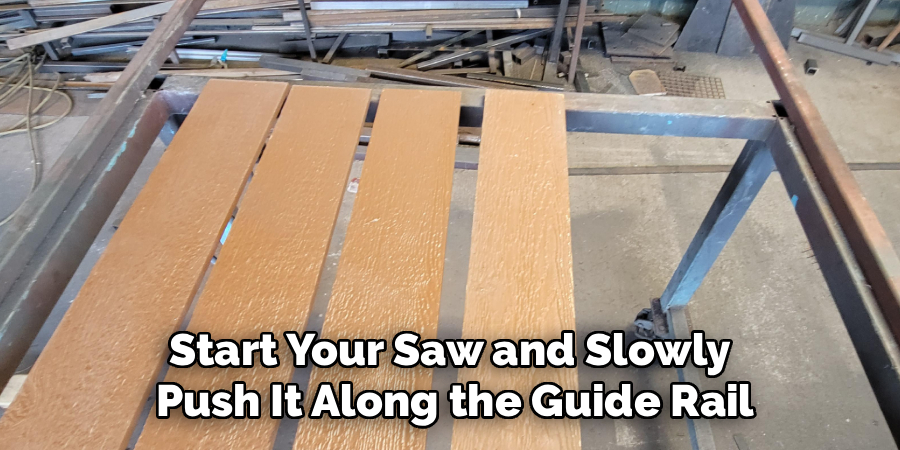
With your guide rail securely in place, it is time to make the initial cut, often called the slabbing cut. Adjust your chainsaw mill depth so that the blade will take off just enough bark and wood to create a flat surface, usually about an inch or two deep. Start your saw and slowly push it along the guide rail, maintaining a steady, even pace. Let the saw do the work; forcing it can cause the blade to wander or overheat. This first pass removes the rounded top of the log, known as the slab, and reveals a flat, smooth face that will serve as the reference for all future cuts.
Step 4: Adjust the Mill for Your Desired Thickness
Now that you have one flat surface, you can remove the guide rail or ladder. The flat face of the log will now act as the guide for your mill on the next pass. Decide how thick you want your planks to be—perhaps one inch for siding or two inches for bench seats. Adjust the height of your chainsaw mill bar to match this desired thickness. Double-check your measurements on both sides of the mill to ensure the blade is perfectly parallel to the mill’s frame. Precision at this stage is vital when learning how to make wood planks that are uniform and usable for construction.
Step 5: Cut the Remaining Planks
With the mill adjusted, place it directly onto the flat face you created in the previous step. Engage the throttle and guide the saw through the log again. As you cut, use wedges to keep the cut open behind the saw; this prevents the weight of the heavy plank from pinching the bar and stalling the chain. Continue this process, slicing off board after board, until you have milled the entire log. Remember to check your chain tension and sharpness regularly, as ripping through solid wood creates a lot of heat and friction. A sharp chain produces long, noodle-like shavings, while a dull one creates fine dust.
Step 6: Seal the Ends to Prevent Cracking
Freshly cut wood, known as green lumber, contains a high amount of moisture. As it dries, moisture escapes from the cut ends much faster than from the center of the board, which causes the wood to shrink unevenly and crack or “check.” To prevent this, you must seal the ends of your planks immediately after milling. Apply a thick coat of commercial end-grain sealer, latex paint, or even melted wax to the ends of each board. This forces the moisture to evaporate slowly through the face of the wood rather than rushing out the ends, significantly reducing the risk of splitting and ensuring your hard work isn’t wasted.

Step 7: Stack and Sticker the Wood for Drying
Proper stacking is the final and perhaps most important step in the milling process. You cannot simply pile the wet boards on top of each other, or they will mold and warp. Build a flat foundation off the ground using cinder blocks or timbers. Place your first layer of planks on the foundation, leaving space between them for airflow. Place small, dry strips of wood called “stickers” perpendicular to the planks every 12 to 18 inches. Lay the next row of planks on top of these stickers. This creates a gap between layers, allowing air to circulate freely around every board. This careful arrangement is the key to mastering how to make wood planks that dry flat and straight.
Step 8: Monitor the Drying Process
Drying wood takes patience. A general rule of thumb for air-drying is one year of drying time for every inch of board thickness. Cover the top of your stack with a piece of metal roofing or a tarp to protect it from rain and direct sun, but leave the sides open so air can flow through. Check the moisture content periodically using a moisture meter. You are aiming for a moisture content of around 12% to 15% for outdoor projects or 6% to 8% for indoor furniture. During this time, keep an eye out for insect activity or signs of rot. Patience during this phase ensures your lumber will be stable and ready for your garden projects.

Frequently Asked Questions
What is the best wood for a beginner to mill?
Softwoods like pine, cedar, or fir are excellent choices for beginners. They are softer and less dense than hardwoods, making them much easier to cut with a chainsaw. This puts less strain on your equipment and allows for faster cutting speeds. Additionally, softwoods like cedar are naturally rot-resistant, making them perfect for outdoor garden projects like raised beds or fences.
Do I need a special chainsaw for milling?
While you can use a standard chainsaw, a saw with a larger engine (at least 50cc to 60cc) is recommended for milling. Ripping through logs requires sustained high power, which can burn out smaller homeowner-grade saws. You also need a “ripping chain,” which is sharpened at a different angle (usually 10 degrees) than a standard cross-cut chain. This specialized chain cuts smoother and faster along the grain.
How do I know when the wood is dry enough to use?
The most accurate way to test dryness is with a wood moisture meter, an inexpensive tool available at most hardware stores. Simply press the pins into the wood to get a reading. For outdoor projects, 12-15% moisture is acceptable. For indoor furniture, you need it much drier, typically between 6-8%. If you use wood that is too wet, it will shrink and warp as it dries in your home.
Can I mill logs that have been sitting on the ground?
You can, but inspect them carefully first. Logs that have been in direct contact with soil for a long time may have begun to rot or may be infested with insects like termites or carpenter ants. Rot makes the wood spongy and unusable for structural projects. Additionally, logs on the ground often collect rocks and grit in the bark, which will destroy your saw chain instantly. Clean them thoroughly before cutting.
Is chainsaw milling dangerous?
Yes, like all chainsaw operations, milling carries risks. However, using a mill attachment can actually be safer than freehand cutting because the saw is clamped to the log, reducing the chance of kickback. Always wear full personal protective equipment (PPE), including chaps, eye protection, hearing protection, and sturdy boots. Never mill alone, and take frequent breaks to avoid fatigue, which is a leading cause of accidents.
Conclusion
Milling your own lumber is a transformative skill that bridges the gap between raw nature and functional craftsmanship. It allows you to see the potential in a fallen tree and turn it into something tangible and lasting. By following the steps outlined above—from selecting the right log and making precise cuts to stacking and drying your boards—you can produce high-quality materials that are often superior to what you can buy. The process teaches patience and precision, rewarding you with custom planks that carry a story and a connection to the land.
Now that you understand how to make wood planks, you are equipped to tackle your own forestry projects. Whether you are building a simple garden bench or a complex shed, the satisfaction of using wood you milled yourself is unmatched. So, grab your gear, find a log, and start discovering the beautiful lumber hidden inside.

About
Mike May is a distinguished figure in the world of woodworking and timber design, with a decade of expertise creating innovative and sustainable indoor solutions. His professional focus lies in merging traditional craftsmanship with modern manufacturing techniques, fostering designs that are both practical and environmentally conscious. As the author of Woodimber, Mike delves into the art and science of timber-craft, inspiring artisans and industry professionals alike.
Education
RMIT University (Melbourne, Australia)
-
Associate Degree in Design (Timber): Focus on sustainable design, industry-driven projects, and practical craftsmanship.
-
Gained hands-on experience with traditional and digital manufacturing tools, such as CAD and CNC software.
Nottingham Trent University (United Kingdom)
-
Bachelor’s in Woodworking and Product Design (Honors): Specialized in product design with a focus on blending creativity with production techniques.
-
Participated in industry projects, working with companies like John Lewis and Vitsoe to gain real-world insights.
Publications and Impact
In Woodimber, May shares his insights on timber design processes, materials, and strategies for efficient production. His writing bridges the gap between artisan knowledge and modern industry needs, making it a must-read for both budding designers and seasoned professionals.