
Maybe you’ve stood in a chilly thrift store, wondering what sort of lumber lurks beneath battered varnish on an old table. Or you inherited a mystery piece from a relative, sturdy but unnamed—and now you’re left guessing. It’s not only a point of curiosity. Knowing what wood you’re dealing with shapes every decision: how to clean it, what to do if it chips, whether refinishing even makes sense, and yes, what it might fetch if you ever decide to sell.
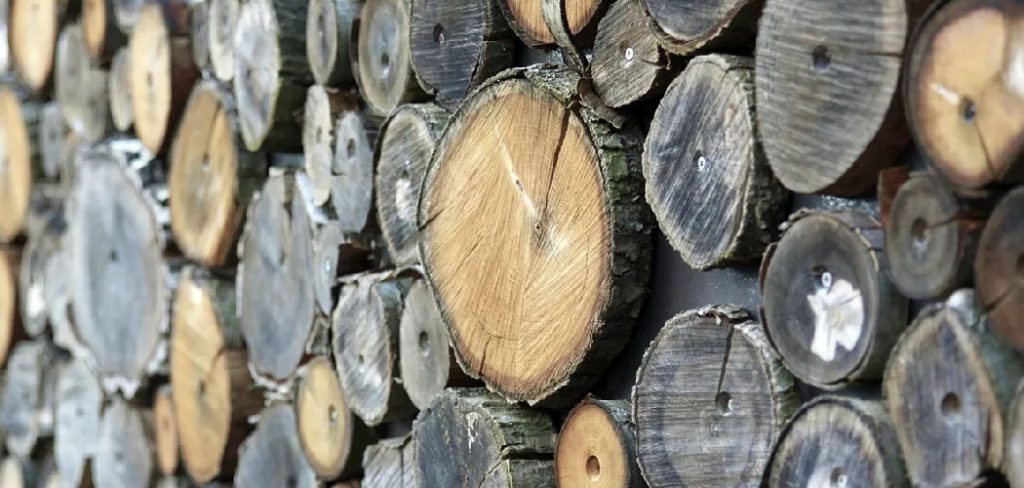
Unraveling the true identity of the wood may sound like something reserved for museum conservators or those people who smell lumber in hardware aisles. Yet, it’s surprisingly within reach—even for weekend dabblers. The trick is to approach the problem like a slow-paced detective, willing to get up close and squint at details others may ignore. With some patience and a willingness to compare notes, you can get impressively close to an answer. In this guide on how to tell what type of wood furniture is made of, we’ll explore a few key factors that can help you identify different types of wood.
Understanding Wood Categories
Before getting tangled up in species—oak or walnut or maybe something less glamorous—it helps to understand the three main groups furniture makers generally use. Let’s start with hardwoods. These come from angiosperm trees (think broad leaves, autumn colors, that sort of thing). Names like oak, maple, cherry, walnut, and mahogany show up here, and they share a reputation for durability driven by slow growth. Heft an oak chair and you’ll notice—it rarely leaves you in doubt. It’s no coincidence these woods end up in things people hope will last through generations of daily scrapes.
Next are softwoods. They’re not necessarily soft, despite the name. These woods hail from conifers like pine, cedar, fir, and spruce. Many of them can take a beating (for construction beams attest to that), but they grow much quicker. Pine’s abundance keeps prices reasonable and explains its popularity in rustic or “country” furniture. Then there’s engineered wood—plywood, MDF, particleboard. These materials are assembled with glue and wood bits, not carved from a single chunk of tree. While they’re unlikely to dazzle with gorgeous grain, they do resist warping better than a wide plank of solid wood, which sometimes seems determined to twist itself into a pretzel.
Tools and Materials You’ll Need
If you’re looking to create your own furniture using wood, there are some essential tools and materials you’ll need in order to successfully complete the project. These include:
- Measuring Tape
- Saw (hand saw, circular saw or table saw)
- Hammer
- Nails and Screws
- Drill (and drill bits)
- Wood Glue
- Sandpaper (various grits)
- Clamps
- Wood Stain or Paint (if desired)
7 Step Guide on How to Tell What Type of Wood Furniture is
Step 1: Weight and Hardness
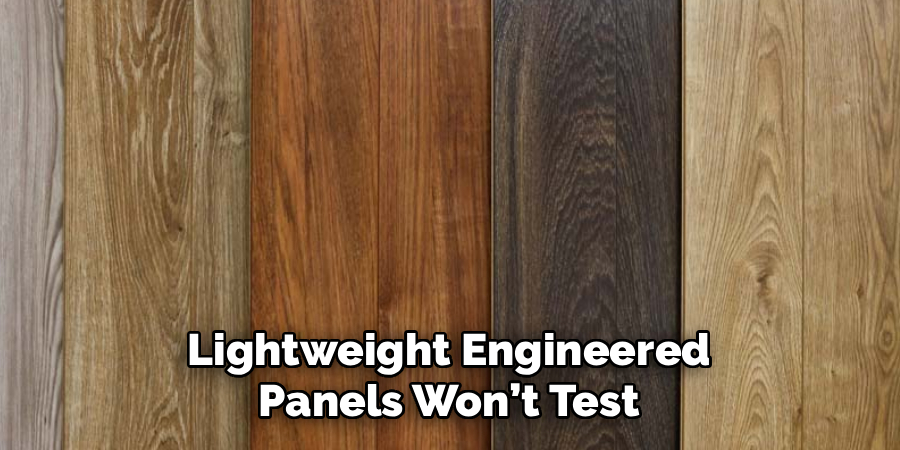
Lift it. There’s no substitute for this tactile step. Hardwood often gives itself away by pure density—if something much smaller than it looks feels like you’re hauling a sack of stones, you’re likely in hardwood territory. Oak and maple rarely travel light. In contrast, softwoods such as pine or furniture crafted with lightweight engineered panels won’t test your back the same way.
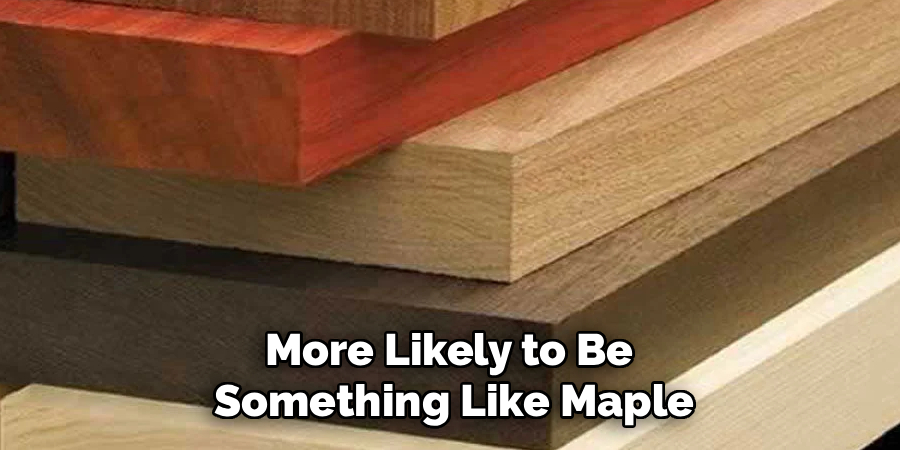
Try rapping your knuckles against the wood. Sometimes it rings out clearly, almost musical; that’s dense material. More of a muted hollow thud? That could point to softwood or a veneer stretched over something even lighter.
Step 2: Grain Patterns
Each tree leaves a story in its grain. Oak is showy—broad, sweeping lines, sometimes with strange “flecks” that can glint under the right lighting. Run a fingernail over unfinished oak and you’ll feel the dips and ridges plainly enough. Maple’s grain, though, tends to be tight and subdued, almost glassy if finished well. Some maple boards surprise you with unusual curls or “bird’s eye” patterns. Pine, never shy, often boasts big, open rings and sporadic, dark knots. It’s not subtle, and those knots tend to repeat themselves across rustic pieces.
Comparing what you see to a reliable photograph—not memory, which likes to play tricks—can quickly weed out a lot of wrong guesses.
Step 3: The Color Test
Sunlight, stains, and years of polish conspire to disguise real wood colors. Ignore what’s visible on tabletops; instead, check the back of a cabinet or inside a drawer. Cherry darkens with age, and sometimes dramatically so—a new scratch reveals just how much the color has changed. Walnut’s chocolatey depth stands apart, especially when it isn’t stained. Pine? It starts life nearly white or soft yellow, slowly turning golden or amber with time. Spotting these honest colors steers you clear of missteps, although, granted, there are always edge cases.

Step 4: End Grain Examination
Flip the piece upside down—literally, if you can manage it—and study the ends. The end grain is honest in a way the polished surface isn’t. With solid wood, the grain wraps predictably from surface to edge. If there’s a sudden disruption—a plane of woodgrain on top with a messy, mismatched edge below—you’re likely seeing a thin veneer glued to something else. Use magnification here; pores and grain flow tell their own stories. Oak and ash, for example, display large open pores in rings, while maple and birch are more demure.
Step 5: Construction and Joints
Here’s where clues about the maker’s intent (and sometimes, their budget) come through loud and clear. Are there dovetail joints—those distinctive, fitting angles—at drawer corners? Mortise and tenon joinery? Wooden pegs over metal? Skill-intensive construction usually means a serious investment of time and material, typical of solid hardwood. Inexpensive softwood or engineered panels rarely warrant that much fuss. Look for metal brackets, staples, or big, flat panels without visible seams—signs that the furniture didn’t get much individual attention and was probably built fast.
Step 6: The (Gentle) Scratch Test
When in doubt, press a thumbnail or coin into an inconspicuous spot—the underside of a seat is a favorite for this. If a dent appears quickly, you’re probably dealing with a softwood; its fibers give in with astonishing ease. If the surface shrugs off your efforts, it’s hard and stubborn, more likely to be something like maple or hickory. There’s no need to gouge out a hunk; a light test will usually tell enough.
Step 7: The Scent Factor
It’s not a joke—sniffing freshly exposed wood reveals real differences. Sand a hidden patch and see what comes through. Cedar practically announces itself with its spicy, nostalgic aroma (closet lining, anyone?). Pine’s scent is sharper, almost astringent, and unmistakably resinous. Rosewood lives up to its name with a subtle sweetness. Smell doesn’t last forever, but especially on old, unfinished pieces, it lingers long enough to clue in those who pay attention.
Following these steps on how to tell what type of wood furniture is made of can help you not only determine the type of wood used, but also understand the quality and characteristics of that wood. Additionally, this knowledge can assist you in making informed decisions when purchasing furniture or refinishing existing pieces.
Common Mistakes to Avoid
It’s easy to leap to conclusions—assuming anything dark is automatically walnut or mahogany, for example. Stains can fool you. Many commercial finishes turn cheaper woods into lookalikes. Ignore the end grain and you may confuse a well-made veneer for genuine solid stock. And heavy? Don’t be too sure that means hardwood.
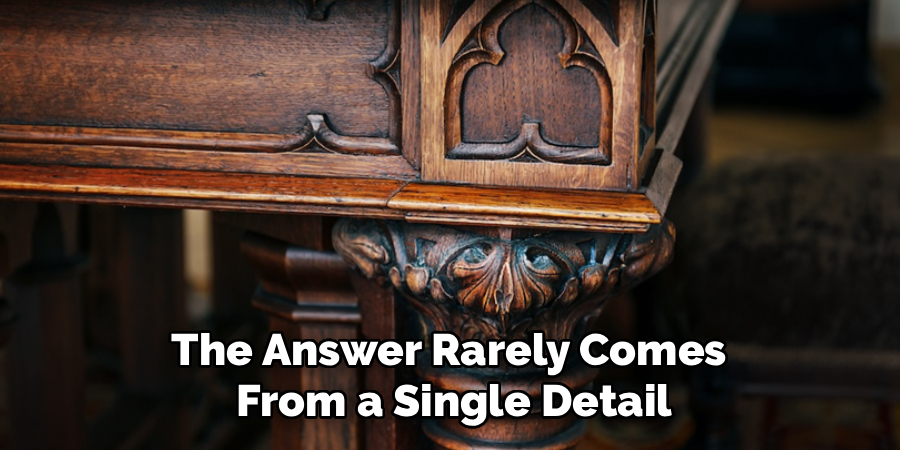
MDF can be punishingly weighty for its size. In the end, the answer rarely comes from a single detail. It takes a collection of close observations—often, the only way to avoid being duped by clever manufacturing shortcuts.
Frequently Asked Questions
Q1: Is Dark-stained Wood Impossible to Identify?
Not impossible, just trickier. Forget the surface color for a moment. Focus on the grain itself, the pore size, and, critically, the heft of the item. Try finding a spot underneath or at the back where a thin layer of finish can be removed or observed. That will often reveal what’s really going on.
Q2: Solid Wood vs. Veneer—Which is Better?
It depends on who’s asking and for what. Solid wood impresses with endurance—it holds up to repair, sanding, and decades of wear. Still, a well-made veneer lets furniture makers use attractive grain on large surfaces and often stands up to humidity changes better. Both have their place, and neither is inherently superior.
Q3: How Can I Identify Pine Specifically?
Pine is fairly straightforward, though not immune to confusion. It’s light—lift a pine chair and you might be surprised. Press a fingernail into it, and you’ll leave a mark. Large, dark knots usually pepper the surface. And if you unearth a raw section, there’s that distinctive, slightly sticky pine scent that hangs around for a while.
Conclusion
Identifying what’s really inside your old furniture is a slow but satisfying process. There’s no single “a-ha!” test—usually, it’s a matter of layering observations, feeling weight, tracing grain, pressing for dents, maybe even risking a quick sniff of the wood. Each comes with its own uncertainty, of course, but together, they paint a reliable picture.
If your goal is to blend a newfound treasure into your home, refinish a battered favorite, or simply understand why a table costs what it does at auction, these habits give you a practical edge. They also make every browse through a thrift shop a little more interesting. Next time you kneel to look at the underside of a dusty desk, you’ll know just what to look for. Thanks for reading this guide on how to tell what type of wood furniture is.

About
Mike May is a distinguished figure in the world of woodworking and timber design, with a decade of expertise creating innovative and sustainable indoor solutions. His professional focus lies in merging traditional craftsmanship with modern manufacturing techniques, fostering designs that are both practical and environmentally conscious. As the author of Woodimber, Mike delves into the art and science of timber-craft, inspiring artisans and industry professionals alike.
Education
RMIT University (Melbourne, Australia)
-
Associate Degree in Design (Timber): Focus on sustainable design, industry-driven projects, and practical craftsmanship.
-
Gained hands-on experience with traditional and digital manufacturing tools, such as CAD and CNC software.
Nottingham Trent University (United Kingdom)
-
Bachelor’s in Woodworking and Product Design (Honors): Specialized in product design with a focus on blending creativity with production techniques.
-
Participated in industry projects, working with companies like John Lewis and Vitsoe to gain real-world insights.
Publications and Impact
In Woodimber, May shares his insights on timber design processes, materials, and strategies for efficient production. His writing bridges the gap between artisan knowledge and modern industry needs, making it a must-read for both budding designers and seasoned professionals.