

Creating your own wood frame is more rewarding than you might think. Whether you’re looking to display a cherished photograph, showcase a piece of art, or add a personal touch to your home decor, building a custom wood frame allows you to craft something truly unique. The best part? You don’t need to be a master carpenter to get started.

This guide on how to make a wood frame will walk you through the entire process of making a wood frame from scratch. By the end, you’ll have the skills and confidence to create beautiful frames that perfectly complement your style and space. Let’s get started.
Tools and Materials You’ll Need
Before diving into the construction process, gather the following tools and materials:
- Wood strips (choose your preferred type: pine, oak, or poplar work well)
- Miter saw or miter box with a hand saw
- Measuring tape
- Pencil
- Wood glue
- Corner clamps or band clamps
- Sandpaper (medium and fine grit)
- Paint or wood stain (optional)
- Glass or acrylic sheet (cut to size)
- Backing board (cardboard or thin plywood)
- Small nails or a nail gun
- Hanging hardware (sawtooth hangers or D-rings)
Having everything organized and within reach will make the building process smoother and more enjoyable.
7 Simple Step-By-Step Guidelines on How to Make a Wood Frame
Step 1: Measure and Plan Your Frame Dimensions
Start by determining the exact size of your frame. Measure the artwork, photograph, or item you plan to frame, then add approximately 1/8 inch to both the height and width measurements. This small allowance ensures your piece will fit comfortably inside the frame without being too tight or too loose.

Once you have your measurements, sketch a quick diagram showing all four sides of your frame. Mark the outer dimensions and the inner dimensions (the rabbet, which is the recessed area where your glass and artwork will sit). This planning stage is critical because accurate measurements prevent costly mistakes later. Remember, you’ll be cutting mitered corners at 45-degree angles, so each piece needs to be precisely measured from the inside edge to account for the frame width.
Step 2: Cut Your Wood at 45-Degree Angles
Using your miter saw, cut each piece of wood at a precise 45-degree angle. You’ll need two identical pieces for the length and two identical pieces for the width. The key here is accuracy—even a slight deviation in your angle will result in gaps at the corners.
If you’re using a miter box and hand saw, take your time with each cut. Secure the wood firmly in the miter box and use smooth, controlled strokes. After cutting all four pieces, lay them out on your work surface to check that they form a perfect rectangle when placed together. If you notice any gaps at the corners, you may need to make small adjustments by sanding or re-cutting. This step requires patience, but it’s worth the effort for a professional-looking result.
Step 3: Sand All Surfaces Smooth
Before assembling your frame, thoroughly sand each piece of wood. Start with medium-grit sandpaper to remove any rough spots, splinters, or imperfections from the cutting process. Pay special attention to the edges and corners where your hands will frequently touch the finished frame.
Once you’ve completed the initial sanding, switch to fine-grit sandpaper for a second pass. This creates a smooth, professional finish that will look polished whether you choose to paint, stain, or leave the wood natural. Sand in the direction of the wood grain to avoid creating scratches. After sanding, wipe down all pieces with a slightly damp cloth to remove any dust particles before moving to the assembly stage.
Step 4: Apply Wood Glue to the Mitered Edges
Apply a thin, even layer of wood glue to one mitered edge of your first piece of wood. Don’t use too much glue—a little goes a long way, and excess glue will squeeze out when you press the pieces together. Press the glued edge firmly against the corresponding mitered edge of the second piece, ensuring they align perfectly at the corner.

Hold the pieces together for about 30 seconds to allow the glue to begin bonding. Repeat this process for all four corners of your frame. Wood glue creates an incredibly strong bond, but it needs time to cure properly. The initial tack happens within minutes, but full strength develops over several hours. Work methodically and check each corner to ensure the angles remain at 90 degrees as you work.
Step 5: Secure the Corners with Clamps
After applying glue to all four corners, use corner clamps or a band clamp to hold everything in place while the adhesive dries. Corner clamps are particularly useful because they apply even pressure to each joint and help maintain those critical 90-degree angles. Tighten the clamps gradually, checking that your frame remains square.
If glue squeezes out from the joints, wipe it away immediately with a damp cloth—dried glue is much harder to remove and can interfere with staining or painting. Let your frame sit undisturbed in the clamps for at least one hour, though overnight is ideal for maximum strength. During this time, the wood fibers bond together, creating joints that are often stronger than the wood itself.
Step 6: Add Reinforcement and Finishing Touches
Once the glue has fully dried, remove the clamps and inspect your frame. For added strength, you can reinforce each corner with small finishing nails or brad nails. Drive one or two nails through each joint at a slight angle—this technique, called “toe-nailing,” prevents the nails from splitting the wood while providing excellent holding power.
Now it’s time to apply your chosen finish. If you’re painting, apply a primer coat first, then two coats of your selected color, allowing proper drying time between coats. For a natural wood look, apply wood stain with a clean cloth, working in the direction of the grain. After the stain dries, protect it with a clear polyurethane or varnish. Sand lightly between coats with fine-grit sandpaper for an ultra-smooth finish. This final step transforms your frame from a simple woodworking project into a polished piece worthy of displaying your favorite memories.
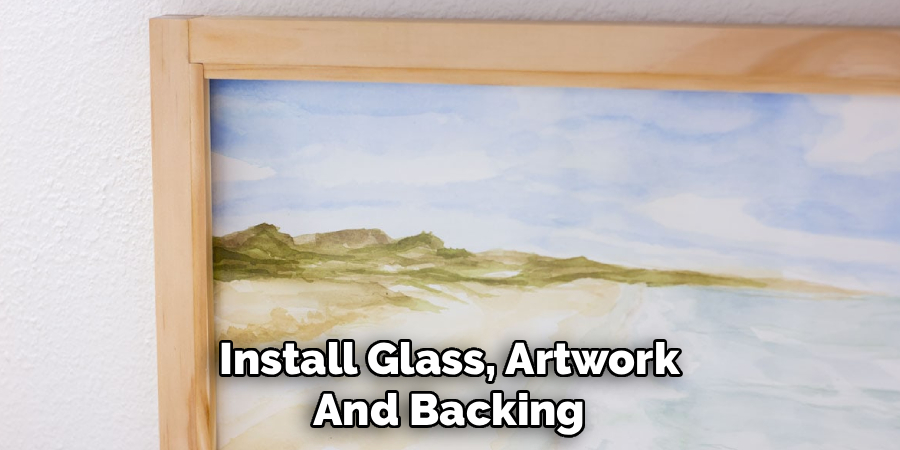
Step 7: Install Glass, Artwork, and Backing
Clean your glass or acrylic sheet thoroughly on both sides to remove any fingerprints or dust. Place it into the rabbet of your frame, ensuring it sits flat against the recessed edge. Next, carefully position your artwork on top of the glass, centering it within the frame opening.
Cut a piece of backing board to fit snugly inside the frame. This backing protects your artwork and holds everything securely in place. Secure the backing board with small nails or flexible glazing points spaced every few inches around the perimeter. Finally, attach your hanging hardware to the back of the frame. For lighter frames, sawtooth hangers work perfectly, while heavier frames benefit from D-rings with picture wire. Your custom wood frame is now complete and ready to hang.

Following these steps on how to make a wood frame can save you money on custom framing services and allow you to create a unique piece of art or display for your home. In addition to this basic process, there are many variations and techniques that can be used to personalize your frame even further.
Do You Need to Use Professionals?
While hiring a professional framer certainly has its advantages, making your own wood frame is an achievable DIY project for most skill levels. Professional framers bring years of experience and specialized equipment that can produce perfectly precise results, especially for complex or valuable pieces. They also have access to a wider variety of materials and can handle unusual sizes or shapes that might challenge a beginner.
However, the DIY approach offers significant benefits that go beyond cost savings. Creating your own frames gives you complete creative control over every aspect of the design, from wood selection to finish. You’ll also develop valuable woodworking skills that transfer to other projects. For straightforward rectangular frames with standard dimensions, the process is manageable with basic tools and patience. Consider starting with a simple project to build your confidence before tackling more complex frames.
The decision ultimately depends on your comfort level with tools, the value and complexity of what you’re framing, and how much you enjoy hands-on projects. If you’re framing irreplaceable artwork or heirlooms, professional framing might provide peace of mind. For family photos, prints, or decorative pieces, DIY framing is both practical and satisfying.
How Much Will It Cost?
The cost of making a wood frame varies considerably based on several factors, but it’s generally much more affordable than purchasing custom frames. For a basic frame measuring 8×10 inches, expect to spend between $5 and $15 on materials. This includes wood strips, glass, backing board, glue, and basic hardware. Larger frames naturally require more material, so a 16×20-inch frame might cost $15 to $30.
Your choice of wood significantly impacts the price. Pine is the most budget-friendly option, while hardwoods like oak, walnut, or cherry cost more but offer superior durability and aesthetic appeal. The initial investment in tools can range from $50 to $200 if you’re starting from scratch, but these tools will serve you for countless projects. A quality miter saw is the most significant expense, though you can start with a simple miter box and hand saw for under $30.
Consider that custom framing at a professional shop typically costs $50 to $200 or more for a single frame, depending on size and materials. Once you’ve made your initial tool investment, each subsequent DIY frame costs only a fraction of professional pricing, making this a project that pays for itself quickly if you frame multiple pieces.
Frequently Asked Questions
Q: What Type of Wood Works Best for Picture Frames?
A: Pine is an excellent choice for beginners due to its affordability, ease of cutting, and smooth texture. It’s lightweight, readily available at most hardware stores, and accepts both paint and stain beautifully. For a more premium look, consider hardwoods like oak, maple, or poplar.
Oak offers distinctive grain patterns and exceptional durability, while poplar provides a smooth, consistent appearance ideal for painted finishes. Each wood type brings its own character to your frame, so consider the style of your artwork and your personal aesthetic preferences when making your selection.
Q: Can I Make a Frame Without a Miter Saw?
A: Absolutely. While a miter saw makes cutting precise 45-degree angles easier, it’s not essential for this project. A miter box paired with a quality hand saw produces excellent results with a bit more effort and patience.
Miter boxes are inexpensive (often under $20) and guide your saw blade to create accurate angled cuts. The key is taking your time and using smooth, controlled strokes to ensure clean cuts. Some hardware stores also offer cutting services, so you can have your wood pre-cut to the exact dimensions you need. This option is particularly helpful when you’re just starting out or working on a one-time project without wanting to invest in specialized tools.
Conclusion
Building your own wood frame is a rewarding project that combines creativity with practical skill-building.
By following these seven straightforward steps on how to make a wood frame, you can create custom frames that perfectly showcase your favorite art, photographs, and memories. The process might seem intimidating at first, but with careful measurement, patient cutting, and attention to detail, you’ll soon be crafting frames that look professionally made.
Ready to get started? Gather your materials, set aside an afternoon, and experience the satisfaction of creating something beautiful with your own hands. Your walls—and your wallet—will thank you.

About
Mike May is a distinguished figure in the world of woodworking and timber design, with a decade of expertise creating innovative and sustainable indoor solutions. His professional focus lies in merging traditional craftsmanship with modern manufacturing techniques, fostering designs that are both practical and environmentally conscious. As the author of Woodimber, Mike delves into the art and science of timber-craft, inspiring artisans and industry professionals alike.
Education
RMIT University (Melbourne, Australia)
-
Associate Degree in Design (Timber): Focus on sustainable design, industry-driven projects, and practical craftsmanship.
-
Gained hands-on experience with traditional and digital manufacturing tools, such as CAD and CNC software.
Nottingham Trent University (United Kingdom)
-
Bachelor’s in Woodworking and Product Design (Honors): Specialized in product design with a focus on blending creativity with production techniques.
-
Participated in industry projects, working with companies like John Lewis and Vitsoe to gain real-world insights.
Publications and Impact
In Woodimber, May shares his insights on timber design processes, materials, and strategies for efficient production. His writing bridges the gap between artisan knowledge and modern industry needs, making it a must-read for both budding designers and seasoned professionals.
1 thought on “How to Make a Wood Frame”